What to Put in a University Care Package
A familiar biscuit, a useful little extra and a note from home. How to put together a university care package that feels personal without filling a small room.
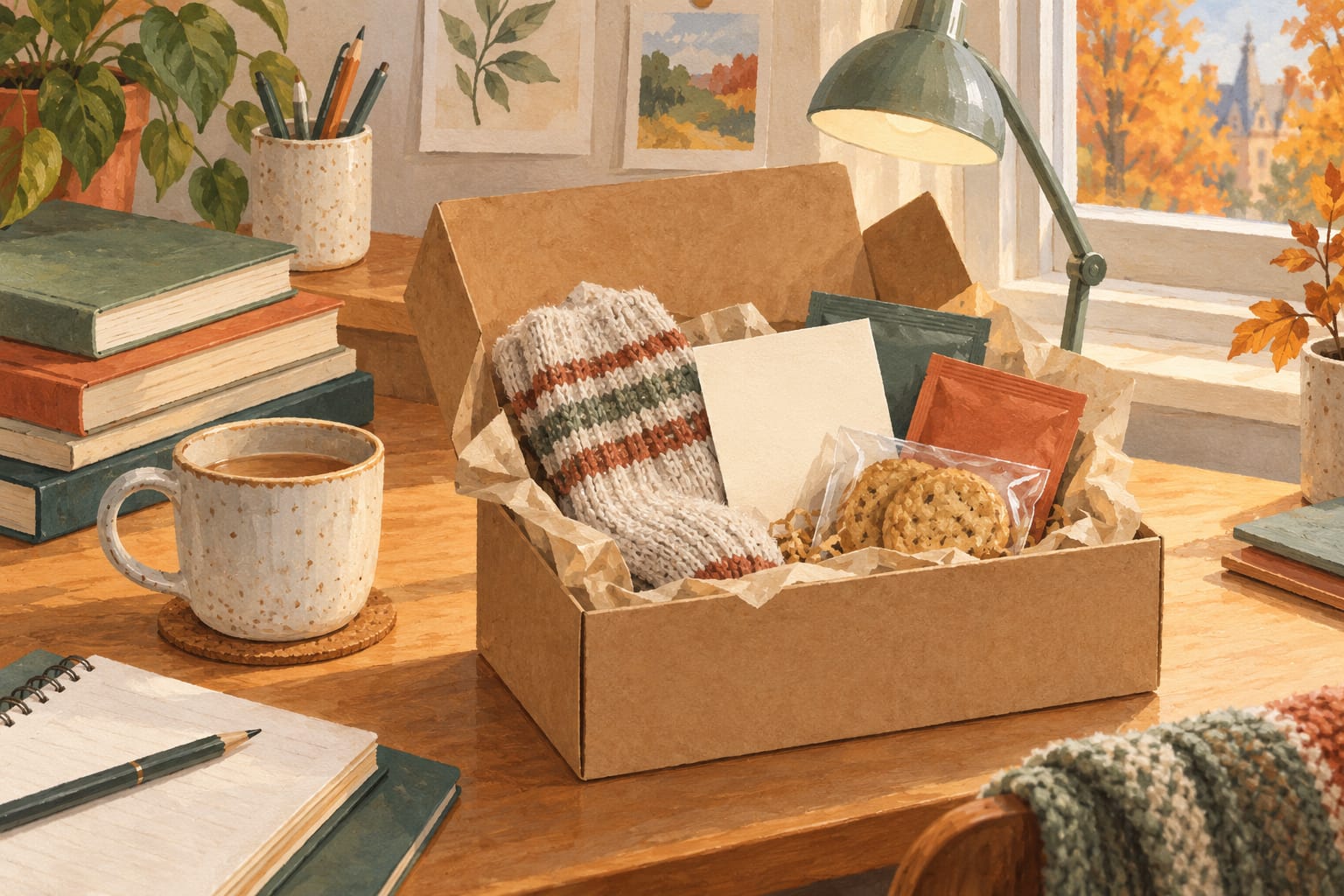
Imagine a parcel waiting after a long day of lectures. Inside is a familiar packet of biscuits, something useful that never quite made it onto the shopping list, and a note in handwriting you know immediately. Nothing extravagant. Just a small reminder that someone has been thinking of you.
If you are deciding what to put in a university care package, choose a few favourite snacks, a useful everyday item and a personal note. Keep the parcel manageable, check food preferences and confirm how the recipient collects post before sending it. The best starting point is their actual routine, rather than a long list of things every student supposedly needs.
Start with one familiar favourite
Think about what they reach for at home: the biscuit they always choose, their usual tea or the little savoury snack they like with lunch. One familiar favourite can give the parcel a clear starting point.
Ask what would be welcome rather than guessing from old habits. Someone who loved making coffee at home may not have the same equipment in their university kitchen. Tea bags, coffee bags or instant drinks might be more practical, depending on what they use now.
Keep food in its original sealed packaging so ingredients, storage instructions and dates stay with it. Check allergies and dietary preferences before choosing, including those of anyone they might want to share with. There is no need to make the whole parcel a surprise.
Add something useful for their week
A care package does not have to be entirely edible. A pair of socks, a notebook or a replacement for the charging cable they have mentioned could be welcome. Let a recent conversation guide you.
Avoid adding bulky things simply to fill the box. Before sending a mug, blanket or kitchen accessory, ask whether they already have one and whether there is room for another. A smaller parcel of things they will use is easier to unpack and put away.
If they have asked for a particular item, take that request seriously. The ordinary thing they need can be more thoughtful than a surprise chosen mainly because it looks good in a gift box.
Make room for a note from home
The note can be the most personal part. Share a small piece of everyday news, mention something you are looking forward to doing together, or simply say that you hope they enjoy a quiet break.
For example: ‘A few favourites for your cupboard and something for your next tea break. We’re thinking of you. No need to reply straight away—enjoy the biscuits.’ Adapt the words so they sound like you.
Keep encouragement gentle. A parcel does not need to carry a reminder about deadlines, washing or how often they should call. If you want to include a photograph or a small drawing from a sibling, choose something they would enjoy keeping.
Think about the shared kitchen
Choose food that suits the storage space and facilities they actually have. Check the label before assuming something can sit in a bedroom cupboard. Ask first before sending anything chilled, fragile or awkward to prepare.
Individually wrapped treats can be handy if they would like to share, but a care package does not have to feed the whole flat. A few things just for them are perfectly reasonable too.
If you are buying a ready-made food gift, read the contents rather than judging by the photograph alone. Check quantities, ingredients and any equipment needed to make the drinks. Our guide to letterbox gifts offers another starting point when you want a compact gift, though the recipient’s own delivery arrangements still matter.
Check the address and collection arrangements
Ask the recipient to send their full postal address exactly as their accommodation requires it, including any room or flat details. Check whether parcels go to reception, a parcel room or their own door. Do not assume a university department address is the right place.
Find out whether they will be there to collect it. A parcel arriving just as they leave for a weekend at home is less useful than one timed around their plans. Check the seller’s or carrier’s current delivery information, and allow room for delays rather than promising a particular arrival day.
If packing it yourself, use a sturdy box, cushion the contents so they cannot move freely and keep heavy items away from crushable snacks. Check your chosen carrier’s current restrictions before sending food or anything that might be restricted.
Keep the gesture comfortable for both of you
Set a budget that feels easy, including packaging and postage. You do not need to keep adding extras until the parcel looks impressive. One favourite treat and a good note can be a complete gift.
Nor does sending one package create a promise to send another every month. It can simply mark an ordinary week when you wanted to say hello from a distance.
Later, the box might be folded away and the useful things put in a drawer. The kettle goes on, a familiar biscuit is opened, and the note is read once more. That small pause is enough for a care package to have found its purpose.